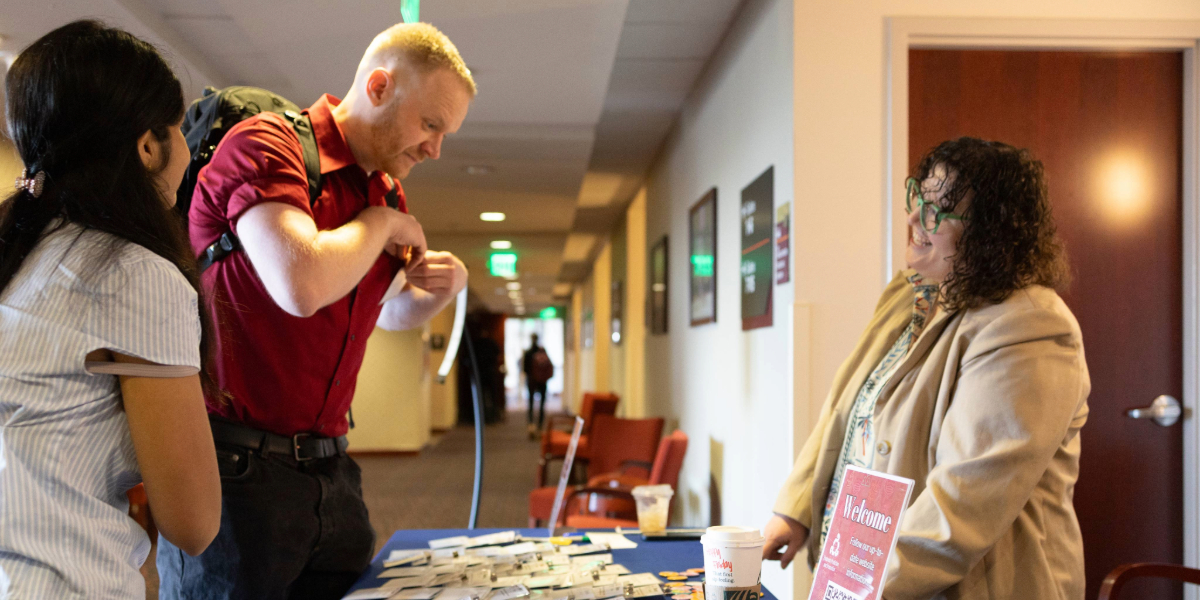
On March 20, 2026, faculty, researchers, and trainees gathered at the South End Zone of Virginia Tech’s Lane Stadium for the 2026 Pandemic Prediction and Prevention Destination Area Symposium, a day dedicated to exploring the future of pandemic preparedness.
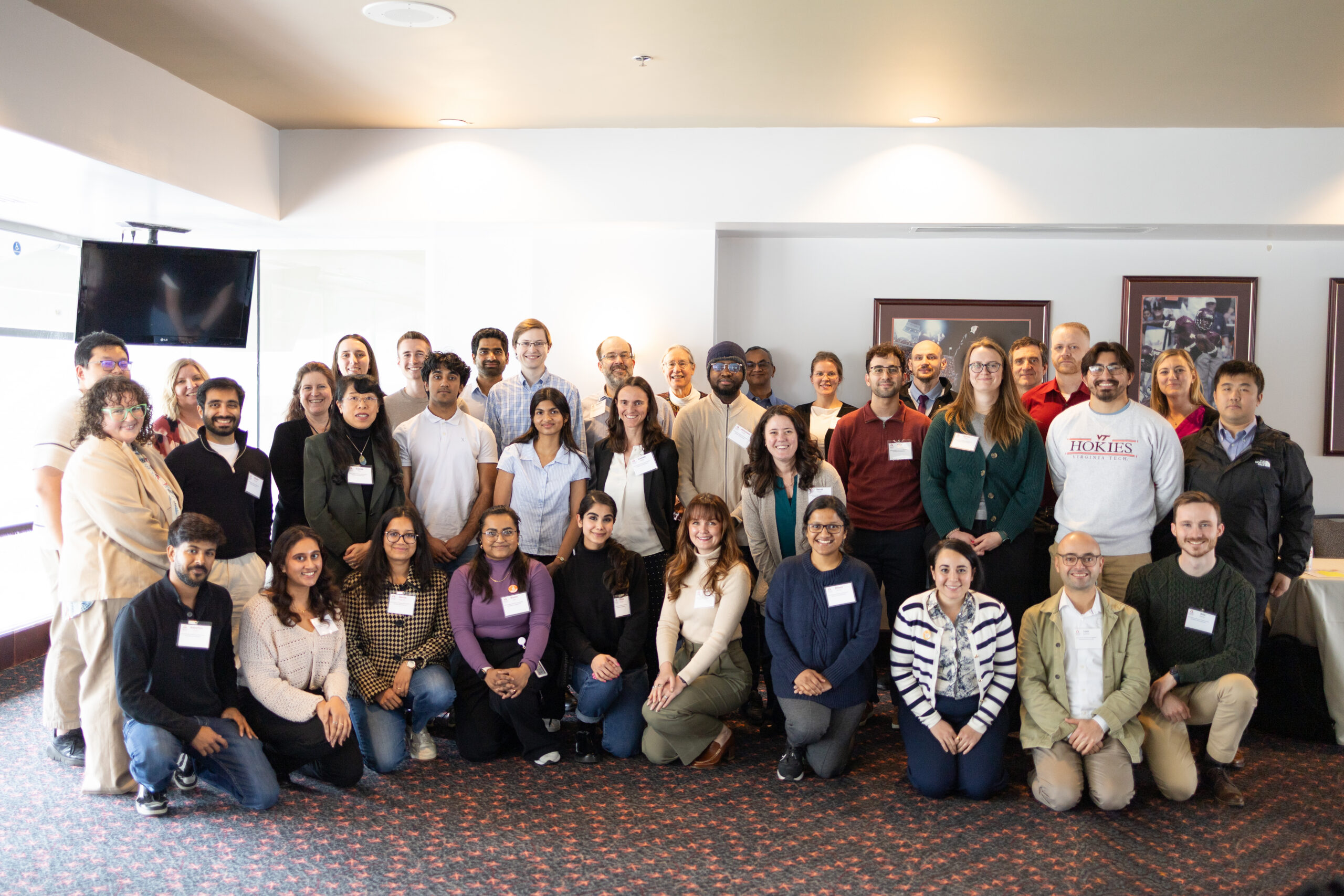
The PPP DA is a transdisciplinary initiative, anchored by four core research themes, dedicated to building a future where we can accurately foresee pandemics and proactively minimize their impact.
The morning opened with the welcoming addresses from Dan Sui, Senior Vice President and Chief Research and Innovation Officer, and Associate Vice Provost, Catherine Amelink.
PPP DA and NSF COMPASS Director T. M. Murali highlighted the DA’s ongoing projects and recent achievements while reinforcing its mission to proactively forecast and minimize future pandemics through interdisciplinary, ethically grounded, and community-based research. He emphasized the Center’s unique convergence of engineering, infectious diseases, computer science, and science communication, along with strong institutional support and a clear path for continued growth and impact.
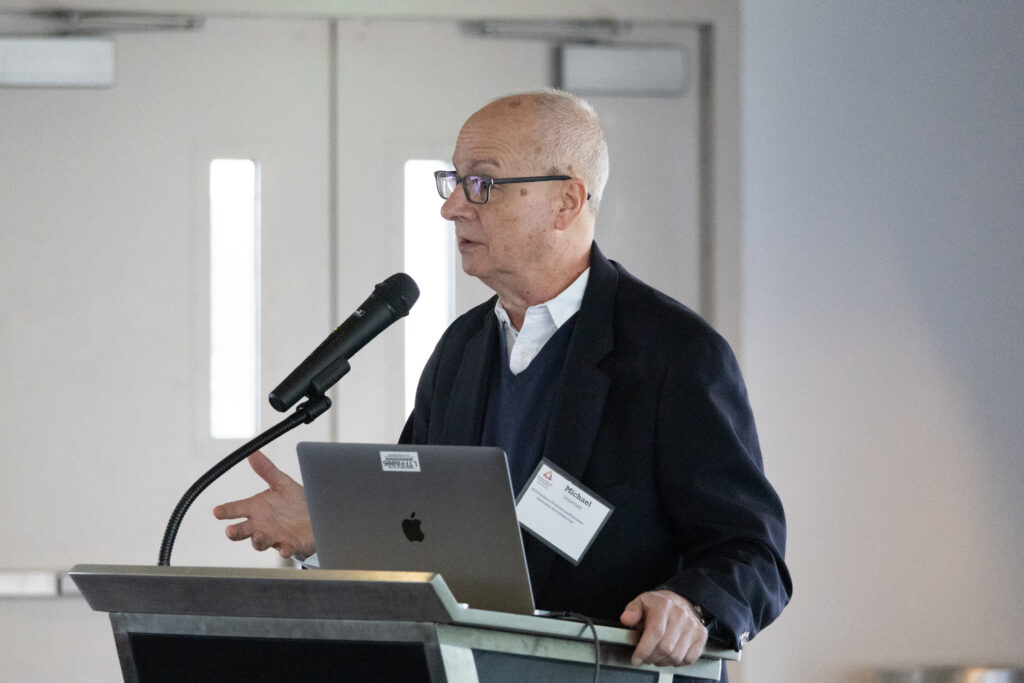
Michael Imperiale, Professor Emeritus of Microbiology and Immunology, University of Michigan Medical School delivered the keynote address, “Emerging Biotechnologies and Pandemic Risks.” The address focused on the role of artificial intelligence within the life science, highlighting both emerging biosecurity concerns and opportunities to reduce risk through innovation and preparedness. The talk was thought-provoking and resonated strongly with participants.
The symposium transitioned into the “Where Are We Now?” session, featuring updates from PPP DA faculty. Speakers shared their progress on projects and seed grant updates, ranging from narrative and public engagement to AI-driven modeling, virus–host interaction research, and antiviral approaches, offering a broad view of current work within the PPP DA.
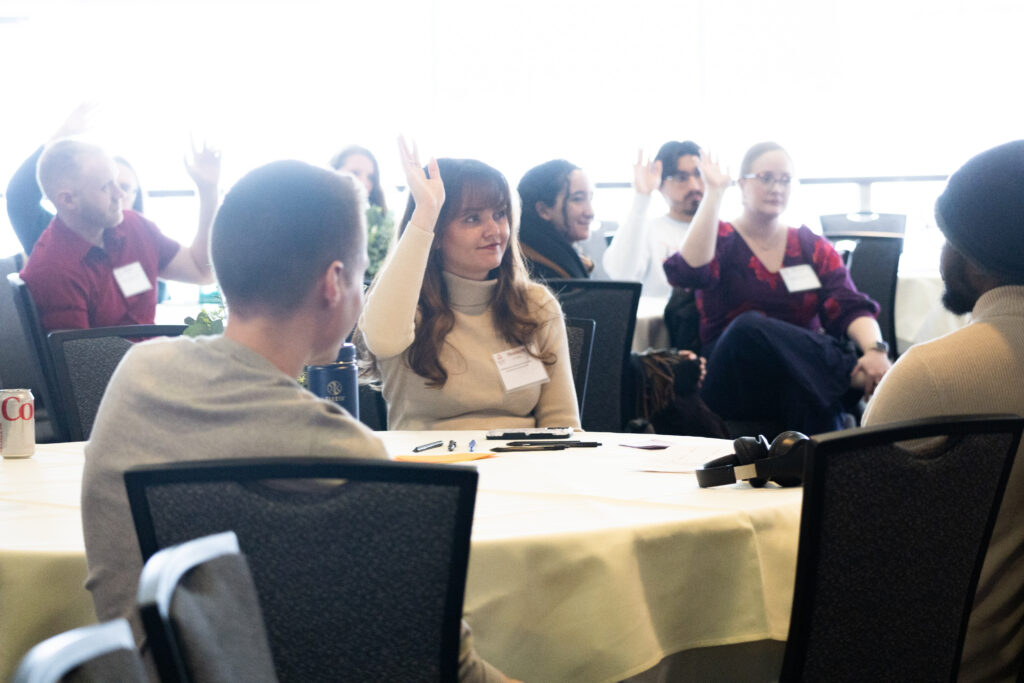
After lunch, attendees participated in two breakout sessions: one on grant writing and flash funding, and another focused on trainee connections. Faculty met in the first breakout session to establish new interdisciplinary collaborations. This session began with short pitches on proposal ideas. The attendees self-organized into groups to turn these ideas into concrete plans and project summaries. Members of the PPP DA are looking forward to seeing how these initial seeds develop into competitive proposals.
The trainee panel led to an engaging discussion about the role of AI in research, including how scientists can maintain quality and credibility in an evolving field, as well as exploring diverse career paths after graduate school. The afternoon concluded with final remarks before attendees transitioned to the evening reception.
The symposium continued into the evening with the opening of the PPP DA exhibit at the Newman Library, right here at Virginia Tech. The exhibit invites visitors to explore all four research themes and how scientists, engineers, clinicians, humanists, and communities work together to understand how viruses emerge, spread, and can ultimately be stopped.
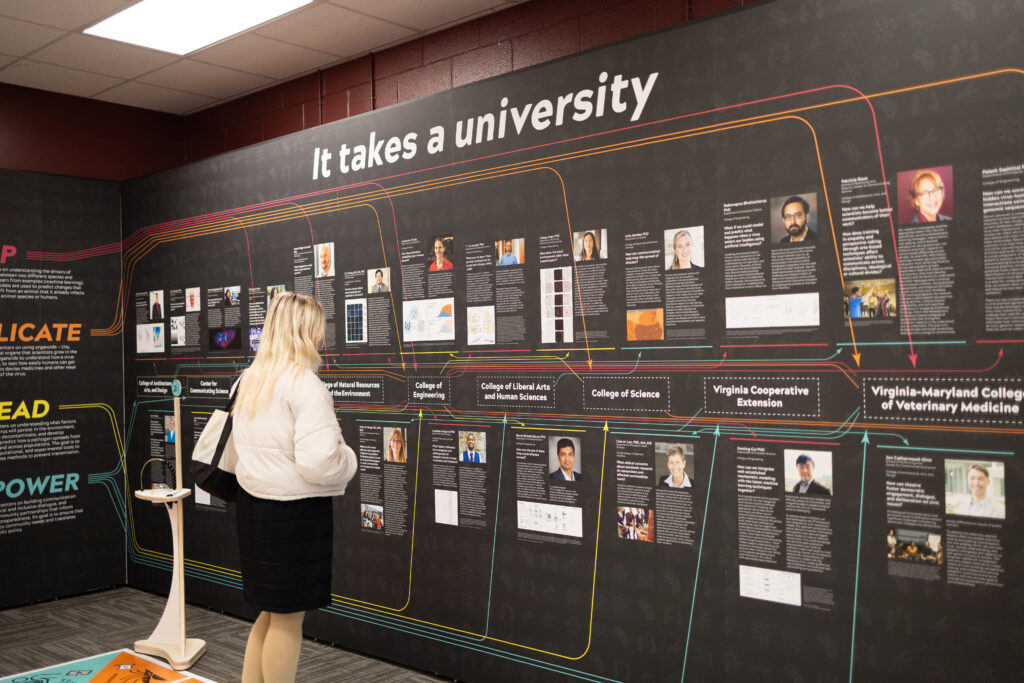
PPP DA Exhibit in Newman Library. Photo courtesy of Liliana Farabaugh
The 2026 Pandemic Prediction and Prevention Destination Area Symposium emphasized Virginia Tech’s commitment to shaping how we foresee and respond to future pandemics through collaboration and ethically grounded research. Bringing together diverse and interdisciplinary perspectives, the symposium provided a look into the ongoing research, challenges, and new directions within the PPP DA. In addition, the opening of the library exhibit brought these conversations beyond the symposium, inviting the broader community to engage with the research and scientists working to better understand and prevent future pandemics.
